
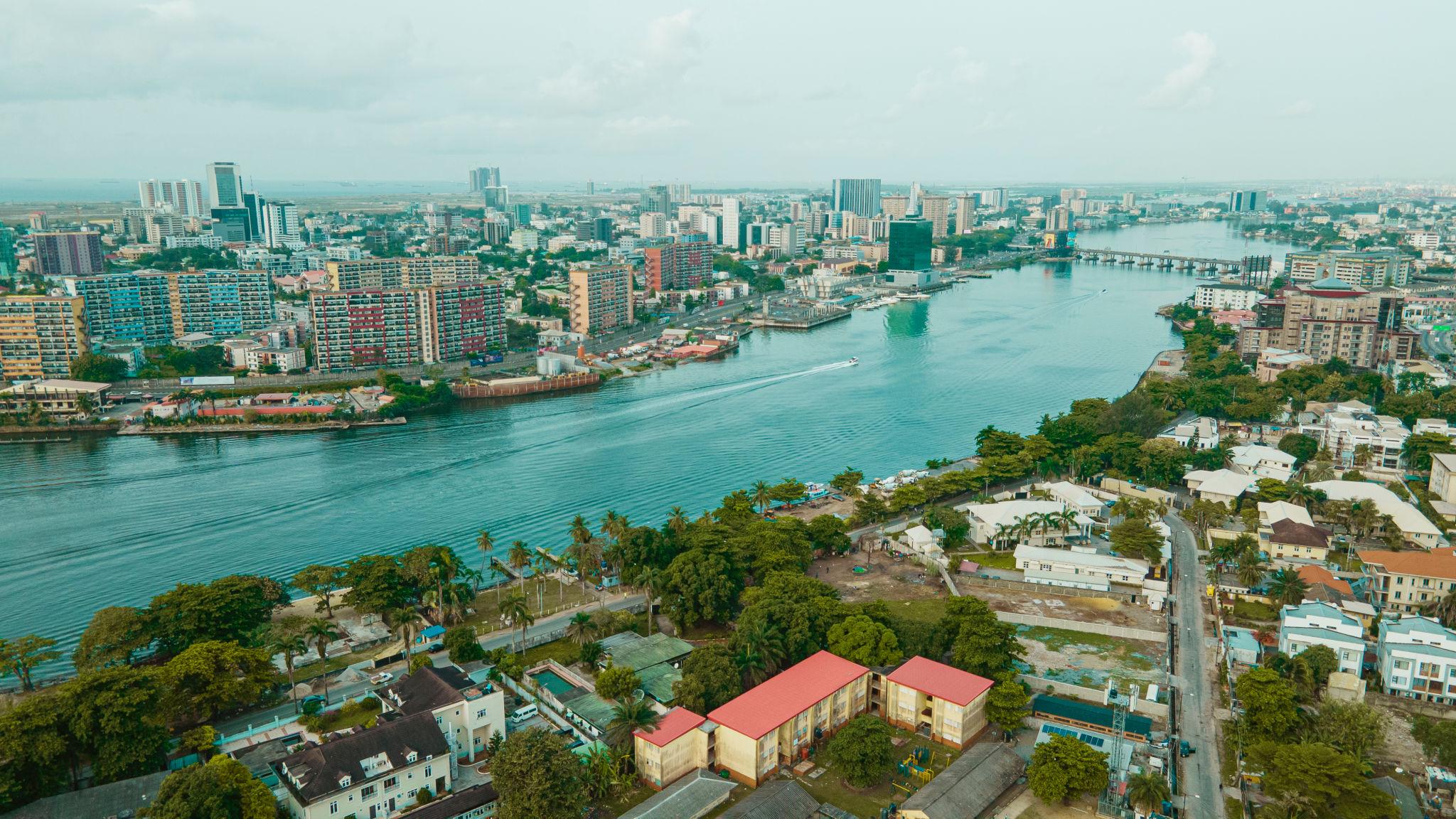
Ikoyi vs Lekki vs Victoria Island: Where Should You Invest in Lagos?
Every year, hundreds of investors — from Abuja businesspeople to diaspora Nigerians in London, Houston, and Toronto — ask me the same question: “Where should I put my money in Lagos?” And almost always, the conversation narrows to three places: Ikoyi, Lekki, or Victoria Island.
These are not interchangeable addresses. Each corridor represents a different investment thesis, a different type of tenant or buyer, and a fundamentally different risk-return profile. After 15 years of personally brokering transactions across all three markets, here is what the data — and the ground reality — actually says.
The Lagos Premium Property Market in 2025–2026
Before we compare neighbourhoods, understand the macro backdrop. Lagos is a market under structural pressure — and that pressure creates opportunity. The Lagos State Housing Report (2025) confirmed the city’s housing deficit has grown to approximately 3.4 million units, up 15% from the 2016 estimate. Demand persistently outpaces supply, particularly in high-end corridors.
Market data from Troloppe Property Services and Knight Frank’s Lagos Market Update H1 2025 shows that average residential rents across prime corridors — Banana Island, Lekki Phase 1, Ikoyi, Victoria Island, and Magodo — rose by 45% between 2024 and 2025. This is not merely inflation passing through to rents; it reflects a genuine structural repricing of Lagos island property, driven by constrained supply, naira devaluation effects on construction costs, and surging diaspora demand.
“Prime real estate in Lagos is no longer driven by speculation. Capital is moving toward assets with strong fundamentals, credible documentation, and long-term value.”— CW Real Estate, Q1 2026 Market Analysis
Property prices across Lagos rose roughly 18% in naira terms between January 2025 and January 2026, with the Lekki micro-corridor posting as much as 25% nominal appreciation in sought-after pockets — per data aggregated by Knight Frank and Nigeria Property Centre. The short-let sector generated ₦281 billion in total revenue across Lagos in 2025, up from ₦264 billion in 2024, according to Edala Development’s Lagos Shortlet Market Report 2025.
These are not modest numbers. This is a market worth understanding precisely before you commit capital.
Ikoyi: The Prestige Play
What it is
Ikoyi is Lagos’s most exclusive residential address — the quiet, tree-lined enclave preferred by high-net-worth Nigerians, corporate executives, ambassadors, and expatriates who prize serenity over spectacle. Bourdillon Road, Glover Road, Kingsway, Osborne, and Parkview Estate are its defining micro-locations. Banana Island — often called the Beverly Hills of Lagos — sits within Ikoyi’s foreshore and commands the highest land prices on the continent.
Price benchmarks (2025)
As of mid-2025, the average price of homes for sale in Ikoyi sits at approximately ₦2.6 billion, with the range running from ₦500 million for modest luxury apartments to ₦13 billion and beyond for full-scale mansions and waterfront villas. Troloppe Property Services reported premium 3-bedroom apartments at ₦1.12 billion by H1 2025. Land in Banana Island now trades at roughly ₦3 million per square metre — a price trajectory that has seen over 500% growth in a decade.
Rental yield and returns
Ikoyi’s yield profile reflects its ultra-premium positioning. Long-term gross rental yields on residential properties typically range from 3% to 5% — compressed by the elevated entry prices relative to achievable rents. A luxury 2-bedroom apartment in a prime Ikoyi tower commands between ₦1 million and ₦1.75 million per month, while 3-bedrooms in serviced buildings can reach ₦1.5 million to ₦3 million monthly. Vacancy rates in Ikoyi stay comfortably below 5%, among the lowest in all of Lagos, and quality tenants — multinationals, oil company executives, and diplomatic households — typically take 2- to 4-year leases. Well-priced apartments in Ikoyi find tenants within 2 to 4 weeks.
For short-let investors, Ikoyi and Victoria Island achieve the highest nightly rates in the city — between ₦60,000 and ₦250,000 per night — making them viable for premium short-stay and Airbnb-style operations, with occupancy rates averaging 50–70%.
Capital appreciation outlook
Where Ikoyi wins decisively is long-term capital preservation and prestige appreciation. Old Ikoyi — along the Bourdillon-Glover-Kingsway axis — has historically delivered 10% to 15% annual appreciation in naira terms for well-located units. For investors thinking in 7- to 15-year horizons, few Lagos addresses match Ikoyi’s combination of scarcity, prestige demand, and institutional tenant quality. Northcourt Real Estate, one of Lagos’s most respected research-based advisory firms, consistently identifies constrained supply meeting persistent high-income demand as Ikoyi’s core appreciation driver.
Datrava Insider Perspective
Ikoyi is the right market if you are buying to hold, not to flip. The investor who bought on Bourdillon in 2015 is not thinking about yields — they are thinking about what that land is worth today. That is the Ikoyi mentality: generational asset building, not quarterly returns.
Who should invest in Ikoyi?
Ikoyi is best suited to high-net-worth individuals and diaspora investors with capital above ₦500 million who prioritise capital preservation, exclusivity, and stable long-term tenancy over aggressive yield chasing. If your primary goal is maximum rental income relative to purchase price, Ikoyi is not your market. If your goal is owning a prestigious asset that will maintain value through economic cycles, Ikoyi remains Lagos’s safest prime bet.
Victoria Island: The Commercial Yield Machine
What it is
Victoria Island is Lagos’s financial and commercial heartbeat. It houses the headquarters of Nigeria’s major banks, multinational corporations, technology firms, law firms, embassies, and global organisations. It sits strategically between Ikoyi and Lekki, with Eko Atlantic City — a reclaimed waterfront smart city development — expanding its premium footprint westward. Its energy is urban, fast-paced, and unapologetically commercial.
Price benchmarks (2025)
Entry-level flats in Victoria Island average around ₦1.2 billion with a range from ₦600 million to ₦4 billion for premium units. A 4-bedroom duplex typically costs around ₦470 million. Land prices on prime VI streets exceed ₦400,000 per square metre. Eko Atlantic apartments average between ₦80 million and ₦600 million for 2- to 4-bedroom units.
Rental yield and returns
Victoria Island delivers higher short-let yields than Ikoyi, particularly near Ahmadu Bello Way, Akin Adesola Street, and the Oniru axis. Top-performing Airbnb properties on prime VI streets generate between ₦1.5 million and ₦3 million per month, per AirDNA Lagos market data cited in The Africanvestor’s H1 2025 analysis. For commercial leases, Grade A office space on VI continues to command exceptional occupancy rates — a trend documented in Knight Frank’s Lagos Market Update and confirmed by Nigeria Housing Market data through early 2026. Long-term residential yields compress to roughly 3% to 5% in mature VI locations, reflecting its pricing premium. Short-let operations targeting corporate travellers and diaspora visitors can push effective yields to 7% to 11% when well-managed.
Capital appreciation outlook
Victoria Island has delivered consistent 10% to 15% annual appreciation in naira terms for well-located commercial-adjacent units over the past several years. Its appreciation is driven more by demand than by speculative infrastructure uplift — the area is already mature and has been for decades. What sustains it is the unrelenting corporate demand for quality space near Lagos’s financial district.
Datrava Insider Perspective
The smartest VI play right now is the serviced apartment positioned for corporate short-let. The same tenant who will not pay ₦350 million for a long-let apartment will absolutely pay ₦4.5 million monthly for a fully-serviced 2-bedroom near their office on Adeola Odeku. The arbitrage between long-let pricing and short-let revenue is real and exploitable.
Who should invest in Victoria Island?
Victoria Island suits investors who want high rental income — particularly from corporate tenants and the short-stay market — and are comfortable with the higher entry price of a mature, fully liquid market. It is ideal for diaspora investors who want a hands-off, professionally managed investment in a globally recognisable address. Commercial property investors also find VI compelling: office occupancy rates remain among the highest in sub-Saharan Africa.
Read this also>>> https://datravarealtors.com.ng/2026/03/11/luxury-living-trends-wellness-privacy-and-smart-technology-in-homes-focus-on-eko-atlantic/
Lekki: The Growth Corridor
What it is
Lekki is the most dynamic and extensive investment corridor in Lagos — a sprawling peninsula stretching from Lekki Phase 1 (adjacent to Victoria Island) all the way through Chevron, Lekki-Ajah, Sangotedo, Osapa London, and into Ibeju-Lekki. This is where infrastructure is being built in real time, and where the sharpest land price appreciation stories have unfolded over the last decade. The Dangote Refinery, the Lekki Deep Sea Port, the Lekki Free Trade Zone, and the proposed Lekki-Epe International Airport are not background noise — they are the investment thesis.
Price benchmarks (2025)
Lekki’s price range is its greatest differentiator. You can enter the Lekki market at a meaningful scale for as little as ₦35 million for a 2-bedroom apartment in parts of Ajah or Sangotedo — rising to ₦500 million and above for premium developments in Lekki Phase 1. According to PropertyPro Nigeria listings cross-referenced with Nigeria Property Centre data, a standard 3-bedroom apartment in Lekki Phase 1 now rents for between ₦15 million and ₦30 million annually. Land in Ibeju-Lekki, once virtually worthless, has appreciated dramatically since the announcement and progress of the Dangote Refinery project.
Rental yield and returns
This is where Lekki decisively outperforms its more established cousins. Gross rental yields in the Lekki corridor — particularly in Osapa London, Ikate-Elegushi, and Lekki Phase 1 — range from 5% to 8%, the strongest sustained yield profile on the Lagos Island axis. The short-let market is particularly robust: Lekki Phase 1 generated ₦93.78 billion in short-let revenue in 2025 alone, making it the highest-earning submarket in all of Lagos, per the Lagos Shortlet Market Report 2025. Average occupancy in Lekki Phase 1 stood at 66% across 2025, peaking at 85% in December. Daily rates averaged ₦226,000 across property types.
Northcourt Real Estate and other Lagos-based advisories consistently identify the Lekki corridor as having the strongest yield-to-entry-price ratio of any prime location in Lagos. Mid-range 2-bedroom apartments in Lekki Phase 1 rent for ₦350,000 to ₦700,000 per month — significant income on properties costing a fraction of comparable Ikoyi or VI addresses.
Capital appreciation outlook
Lekki is delivering some of the most dramatic capital appreciation in Lagos. The Africanvestor’s 2026 analysis projects 12% to 18% nominal appreciation in the Lekki micro-corridor and 15% to 22% in the Ibeju-Lekki axis, driven by infrastructure completion timelines. Between 2022 and 2025, many early-entry investors achieved 40% to 70% capital gains on land and new-build properties in developing Lekki pockets. Knight Frank’s Lagos H1 2025 report specifically highlights the Ibeju-Lekki corridor as a primary driver of new investment interest, citing port and free trade zone activity.
Datrava Insider Perspective
If you are a diaspora investor with ₦50 million to ₦200 million and you are serious about returns, Lekki is your market in 2025. Buy in the right sub-pocket — Lekki Phase 1 for income, Ibeju-Lekki for capital — and the infrastructure will do the work. The window for pre-infrastructure pricing in Ibeju-Lekki is narrowing with every completed milestone at the refinery and deep-sea port.
Who should invest in Lekki?
Lekki suits a wide range of investor profiles: first-time buyers, mid-budget diaspora investors, and serious portfolio builders who understand infrastructure-led appreciation cycles. It is also the primary market for short-let operators seeking scale. Lekki Phase 1’s established hospitality ecosystem makes it the easiest entry point for serviced apartment investors. The key risk to manage is documentation: the Lekki corridor has historically been a hotspot for title disputes and fraudulent allocations. Work only with registered surveyors and verify Governor’s Consent or Deed of Assignment chains before committing any funds.
Head-to-Head Comparison
| Factor | Ikoyi | Lekki | Victoria Island |
|---|---|---|---|
| Entry Price Range | ₦500M – ₦13B+ | ₦35M – ₦500M+ | ₦600M – ₦4B |
| Gross Rental Yield (long-let) | 3% – 5% | 5% – 8% | 3% – 5% |
| Short-Let Yield (managed) | 7% – 11% | 7% – 11% | 7% – 11% |
| Capital Appreciation (annual, naira) | 10% – 15% | 12% – 25% | 10% – 15% |
| Vacancy Rate | Below 5% | 5% – 10% | Below 8% |
| Dominant Tenant Type | HNW, Expats, Diplomats | Young Professionals, Corporates, Short-Stay | Corporate, Executives, Short-Stay |
| Best Investment Style | Long-hold, capital preservation | Income + growth, land banking | Commercial, managed short-let |
| Documentation Risk | Low | Medium – due diligence essential | Low |
| Infrastructure Upside | Mature – limited uplift remaining | Significant – port, refinery, airport | Eko Atlantic expansion ongoing |
| Diaspora Investor Suitability | Very high (₦500M+ budget) | Very high (₦50M+ budget) | High (₦600M+ budget) |
The Honest Risks You Must Know
No investment guide from a Lagos real estate professional is complete without a frank discussion of risk. All three markets carry real challenges that no amount of positive sentiment should obscure.
Flooding: In July 2024, torrential rains flooded upscale parts of Ikoyi and Lagos Island, including Victoria Island, forcing some residents to evacuate. This is not an isolated incident — drainage infrastructure in all three corridors remains inadequate for extreme weather events. Always inspect drainage records and estate management before committing to any property.
Title fraud: The Lagos land registry remains imperfect. Fraudulent C-of-O documents, double sales, and disputed family land exist across all price points. Engage a registered estate surveyor and a qualified property lawyer — not just an agent — before any transaction.
Currency risk for diaspora investors: Properties are priced in naira. Naira devaluation has historically worked in favour of diaspora buyers (as USD, GBP, or CAD purchases more naira), but repatriation of rental income requires proper documentation and FIRS compliance to avoid complications.
Construction cost inflation: The price of cement rose from approximately ₦4,500 per 50kg bag in early 2024 to over ₦8,500 by early 2025. Off-plan purchases must account for this inflation risk, particularly for projects without fixed-price guarantees.
Check this property video on YouTube below >>>
The Bottom Line
There is no universally correct answer to “Ikoyi, Lekki, or VI?” — only the answer that is correct for your budget, your timeline, your yield expectations, and your risk tolerance. What I can tell you unequivocally, after 15 years in this market, is that Lagos Island real estate rewards the patient, the informed, and the disciplined.
The investors who are winning in this market today are not the ones who chased rumours. They are the ones who did their due diligence, bought in the right sub-pockets before the infrastructure arrived, and held through the naira’s volatility. They are the ones who understood that a ₦70 million Lekki land play in 2018 is now worth multiples, and that a Bourdillon apartment bought in 2012 has compounded far beyond any naira-denominated savings rate.
The opportunity is still here. But it requires the right guidance.

Onyeodirimma Darlington
Onyeodirimma Darlington is a Nigerian entrepreneur, real estate strategist, and investment advisor with nearly a decade of experience in the Lagos real estate market and the fixed income segment of the Nigerian capital market. As the CEO of Datrava Realtors, and the founder of Datrava Limited, he has built a reputation as a trusted guide for **high-net-worth individuals (HNIs) and Nigerians in the diaspora seeking secure and profitable investment opportunities in Nigeria. Through his advisory work, Darlington has helped investors acquire high-growth real estate assets in Lagos and beyond, while also diversifying their portfolios with stable fixed-income instruments such as treasury bills, bonds, fixed income notes, and other capital market securities. Known for his market insight, due diligence standards, and investor-first approach, Onyeodirimma Darlington focuses on helping clients mitigate risk while maximizing capital appreciation, rental income, and predictable investment returns. His work bridges the gap between global investors and credible opportunities within Nigeria’s rapidly expanding real estate and financial markets. Through education, strategic advisory, and investment structuring, he continues to empower investors to build long-term wealth through secure property investments and fixed-income assets in Nigeria.